

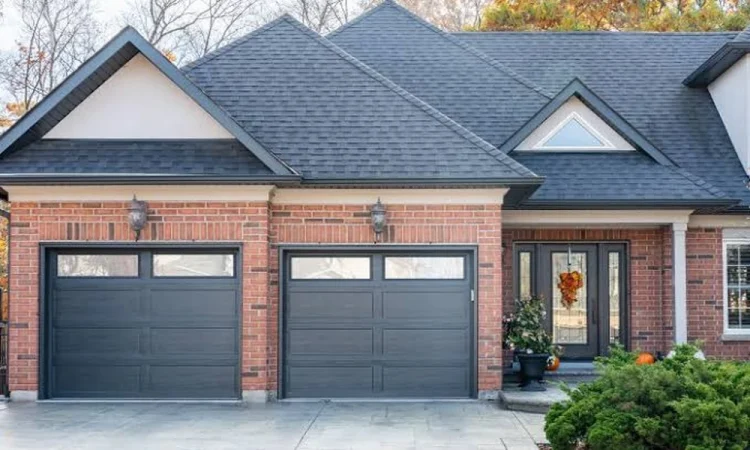

Ask most people what their garage door does and they will say it opens and closes. That answer undersells it badly. On a typical Colorado home, the garage door is the largest moving object on the property, the widest opening in the outside walls, and for many families the entrance they actually use. It lifts a heavy load several times a day, takes the brunt of hail and wind, and sets the tone for the whole front of the house.
Homeowners sizing up Aurora garage doors for a replacement can find new doors and complete replacement systems at royaltyconstructionco.com, a Denver metro exterior contractor whose crew also handles windows, roofing and siding from its Lone Tree office. Whether you are shopping or simply trying to keep an older door going, it helps to judge any door by the five jobs it carries out without much thanks.
Job One Is Lifting Far More Than You Think
A single car door can weigh well over a hundred pounds, and a wide insulated or wood door can climb into the hundreds. Your opener is not built to lift that weight on its own. The springs do the heavy work, and the opener mostly guides a door that is already balanced.
Most newer homes use torsion springs mounted on a bar above the opening, while older or smaller setups often have extension springs stretched along the horizontal tracks. Standard springs are commonly rated for around 10,000 cycles, which sounds like a lot until you count. Two trips out and back each day means four cycles, and a busy household can wear through a standard spring in well under a decade.
Springs rarely fail without warning. Watch for these signs.
- The door feels much heavier when you lift it by hand with the opener disconnected.
- It drifts down or shoots up when you let go partway, instead of holding still.
- You see a visible gap in a coiled torsion spring, which usually means it has snapped.
- The opener strains, slows or reverses for no clear reason.
A simple balance check takes a minute. Pull the emergency release, lift the door to about waist height and let go carefully. A healthy door stays roughly where you left it. Springs and cables hold enormous stored energy, though, so adjustment and replacement belong with someone who has the right winding bars and training.
Job Two Is Keeping Colorado Weather Outside
The second job is sealing, and it involves more parts than most people realize. A bottom seal presses against the floor, a perimeter weatherstrip runs along the sides and top, and the joints between panels need to close tightly. When any of these harden or crack, wind pushes snow and dust underneath and warm air escapes from an attached garage that often shares walls with living space.
Water sneaking under the bottom edge is a common complaint, especially when melting snow drips off a parked car or the driveway slopes toward the slab. The Door and Access Systems Manufacturers Association publishes free technical data sheets on exactly this kind of issue, along with condensation and thermal performance. One point from its guidance surprises many buyers. The R-value printed on a brochure is usually calculated for a slice of a door section, while U-factor comes from testing the entire assembled door, so U-factor gives a more honest picture of how well a door actually holds heat.
Job Three Is Absorbing the Hits
Hail is the reason many Front Range garage doors get replaced long before they wear out. Thin steel dents easily, and a door covered in dimples looks tired even when it works fine. Steel thickness is listed by gauge, and the lower the number, the thicker the metal, so a 24 gauge skin stands up better than 25 or 26 gauge. Insulated doors with foam bonded to the steel resist dents better still, because the core backs up the surface. An embossed woodgrain finish also hides small dings that would stand out on a smooth panel.
Wind is a separate test. Strong gusts flowing off the foothills can flex a wide door in its tracks, and reinforcing struts across the panels help keep it rigid.
Sunlight brings a sneakier problem. At this elevation, UV is strong, and dark painted steel doors absorb a lot of heat on summer afternoons. Insulated doors with bonded cores can actually bow outward slightly as the sun side expands faster than the shaded side, a known effect the industry calls thermal bowing. Lighter colors, or dark finishes rated for heat by the manufacturer, reduce the risk.
Job Four Is Guarding the House
An attached garage is a back door to your home, and the opener is its lock. Older openers that used fixed codes could be copied, while modern units use rolling codes that change with each press. Beyond that, the features worth caring about are practical ones.
- Photo eyes mounted low on each side of the opening that reverse the door if something crosses the beam.
- Battery backup so the door still works during a power outage.
- Smartphone alerts that tell you whether you left the door open.
- A shielded emergency release, which makes it harder for someone to hook the cord from outside through the top gap.
Test the auto reverse feature every month. Lay a roll of paper towels or a short piece of lumber in the door’s path and close it. The door should touch the object and immediately head back up. If it pushes down hard or keeps going, stop using the opener until it is adjusted.
Job Five Is Being the Face of the Home
On many homes in newer subdivisions, the garage door takes up a third or more of the front elevation. That makes it one of the cheapest ways to change how a house looks from the street. Carriage style panels, flush modern designs, glass inserts along the top section and richer colors can all freshen a facade without touching the siding.
Before ordering, check with your homeowners association if you have one. Many neighborhoods across the area keep approved lists of door styles and colors, and a change made without approval can lead to a letter asking you to undo it. Garage door replacement also tends to rank among the better returns in national remodeling cost surveys, so a well chosen door can help when it comes time to sell.
Putting the Five Together
The best door for one house is not always right for another. A family that opens the garage a dozen times a day needs high cycle springs before fancy windows. A home that faces west under open sky needs dent resistance and a color that handles heat. A garage tucked under a bedroom needs tight seals and a strong tested U-factor.
When you look at your own door with all five jobs in mind, it becomes easier to tell whether a repair will do or whether the whole system has earned its retirement. Either way, the door will keep doing its work in the background, which is exactly how a good one should feel.