

Loading furniture without causing damage depends on four trained stages that professional crews follow in strict order. Teams from the best packers and movers in India pad every surface, clear the carrying route, control lifting angles, and lock each piece inside the vehicle. The sections below explain what each stage does and the damage it prevents.
Padding before lifting
Padding before lifting means no furniture piece leaves its room until its damage-prone surfaces are covered. For glass tops, bubble sheets are applied, polished wood is wrapped in moving blankets, and foam guards are placed on all corners, since corners take the most abuse while travelling through doors. As opposed to tape, which is prone to stripping varnish when peeled, stretch film holds the padding in place. Sofa fabric gets plastic covers against tears and stains from gripping hands. This padding stage decides most of the loading outcome, since a wrapped piece survives the accidental knocks that an exposed piece cannot. Cushions, shelf boards, and drawer units, which are loose parts, are taken out first and are transported separately, so there are no swings or slides inside the furniture.
Clearing the carrying path
Clearing the carrying path happens before the first piece moves. The crew walks the exact route from room to truck. Doors get held open or lifted off hinges when clearance is tight, floor edges get ramp boards, and passages get emptied of obstacles. This clearance exists because furniture is damaged by collision far more than by dropping. A cleared, measured path lets carriers move without sudden stops or forced turns, which is where frames twist and corners strike walls.
Controlling lift angles
Both techniques come from crew training, and both prevent the joint cracks that appear weeks after a move when angles were handled carelessly during loading.
- Doorway tilting method – Controlling angles at doors means wardrobes and sofas pass through tilted diagonally, one end raised, so the widest section crosses at the frame’s widest point without scraping either side.
- Stair descent position – Controlling angles on staircases means the lower carrier holds the piece higher than normal, keeping it level. A level piece keeps its weight on the frame, while a slanted one loads all pressure onto a single joint.
Securing the inside of the truck
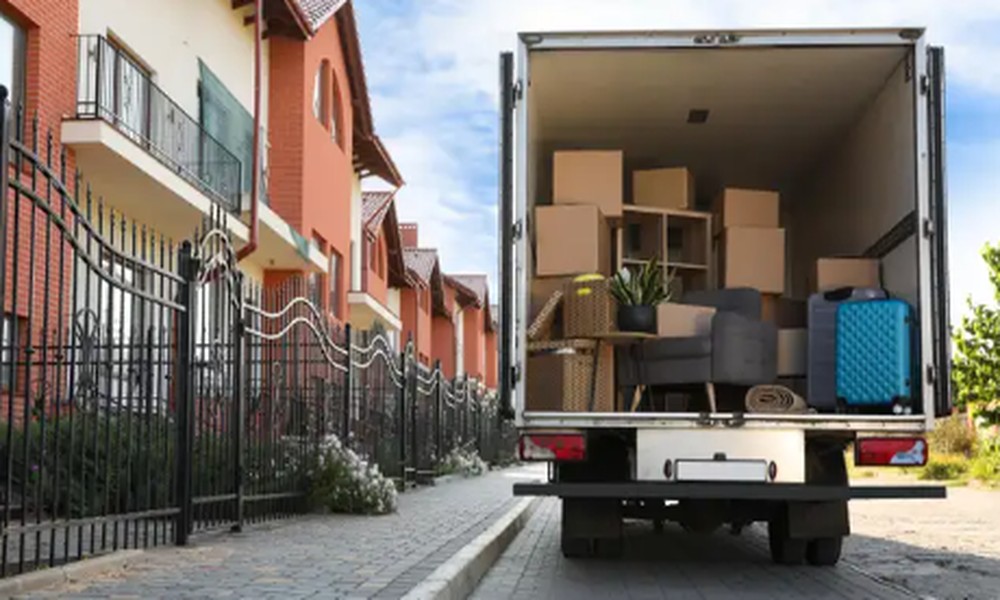
Securing inside the truck is the final loading stage and follows a strict weight order. Heavy furniture stands upright against the front wall, flat side to the truck body, and gets strapped to the rails before anything else enters. Lighter items layer above, never beneath.
Mattresses slide between hard pieces as cushioning walls. Glass panels stand vertical between padded boards, never flat, where road vibration cracks them. A crew member always pushes against each item before closing to make sure it doesn’t shift because even an inch of free movement inside a braking truck can cause an impact. Moving furniture eliminates the possibility of furniture being damaged during transport.
The first step in moving furniture is to pad the surfaces. The path should be cleared before carrying, angles through doorways should be controlled, and each piece should be locked inside the van. Training crews run all four stages sequentially to ensure that no damaged equipment enters the system if any of them are skipped. The result shows at delivery, when each piece comes off the truck exactly as it was wrapped.