
Plywood is used in many items, including wardrobes, kitchen and storage cabinets, partitions, doors and wall panels, and other interior applications. However, merely choosing the right plywood is not enough, as one must check the plywood for its condition, the purpose it will serve and the place where it will be installed.
Consider Where the Plywood Will Be Used
This first step is to find out about the location and the purpose. The different areas of a home are crowded with items with different degrees of humidity, loads and exposure to environmental factors.
For instance, the items in a bedroom could be completely different from those in a kitchen or a bathroom, so you need to think about the purpose while making a decision.
Select the Correct Grade of Plywood
Choosing plywood must depend on the conditions that it will have to face. MR plywood is usually used in less humid environments, whereas items that may be exposed to a high level of moisture must be made of BWP plywood or any other type that can withstand moisture.
Do not choose plywood simply because you have seen it often. Consider the humidity level, water exposure, load and usage time of the plywood being installed.
Inspect the Plywood Before Installation
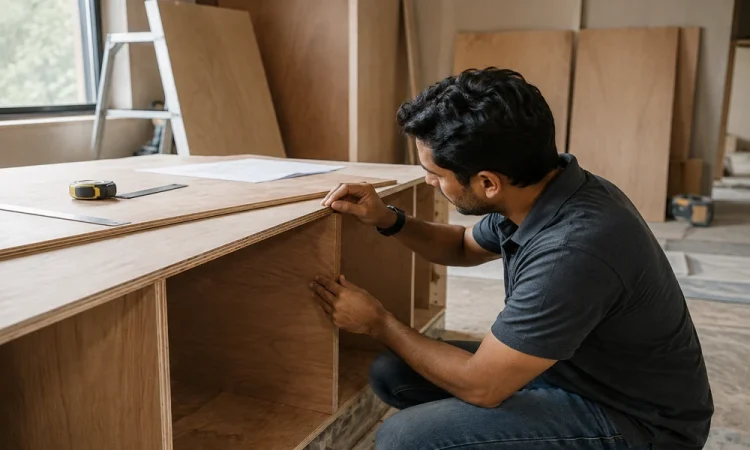
Before plywood is cut or installed, all sheets should be checked to avoid damage. Carefully examine the surface of the plywood for cracks, unnecessary imperfections, damage, and other flaws. Edges must also be checked for poor seams, excessive gaps, or excessive looseness. Any of these issues could affect the cutting, drilling, or assembly of any piece made from plywood.
Check the Thickness and Dimensions
It must be ensured that the actual thickness of the plywood sheet matches the necessary requirements. When multiple sheets are used for cabinets, wardrobes, or other items, it is especially important to ensure that the thickness is the same.
Wrong measurements could lead to difficulties during construction. Changes in thickness could also lead to tighter joints and misalignment.
Think About Moisture Exposure
The moisture level should be considered before installing plywood products. Places like kitchens, bathrooms, or any other areas close to plumbing systems are characterized by high humidity and water splashes.
The kind of plywood used must correspond to these conditions. Cut edges and screw holes should also be protected. Keeping sheets humid or letting them be near water may affect the material even before its usage.
The sheets are supposed to be supported sufficiently, and the humidity shall be taken into consideration at all storage stages. It is essential to avoid contact with rain, pools of water, or too much moisture so that dimensions can be retained.
Prepare the Installation Area
Before starting the installation process, one should prepare the floor, wall, frame, or another kind of supportive structure. One should clean and dry the required surface and make sure that it is stable enough and levelled well enough to proceed with installation.
An improper support surface may lead to issues with alignment and excessive pressure on the plywood units. Proper measurements should be taken before cutting so that installation errors and waste of material can be avoided.
Check Hardware and Fasteners
Plywood furniture can include hinges, screws, drawer guides, handles, brackets, locks, and other hardware. It is important to use the required hardware which fits the plywood dimensions and furniture style.
The position of joints, links, and fasteners should be determined before the start of the cutting process. Correct fastening contributes to the stability of a piece of furniture and minimises the chances of items coming loose during the operating process.
Plan the Finish
It is important to choose a finishing method before beginning the process of installation. Laminates, veneers, paints, polishes, or other decorative items may require different techniques and methods to be used.
A properly prepared surface of plywood helps with finishing. It is necessary to know which parts of the plywood will be visible and whether any special treatment is required.
Choose Plywood Based on the Application
The right item should depend on the place where it is going to be installed. MR plywood can be suitable for dry interior furniture, while the use of BWP plywood can be more reasonable where conditions require a higher level of moisture resistance.
It is possible to compare products based on grade, thickness, core construction, and the place of usage. The choice of products such as Royale Touche BWP plywood can be made because of the need for increased moisture resistance of the materials, while realising the final choice should be made based on particular installation conditions.
Conclusion
The process of checking plywood is important to avoid many issues from arising during the process of installation and usage. It is important to consider the grade of plywood, dimensions, thickness, core construction, conditions of exposure to moisture, storage conditions, installing surface, hardware and finishing needs.